
When you meet someone with a disability, the first thing you should notice isn’t their mobility aid, their speech pattern, or their assistive device. It’s the person. Melinah Viking, a wheelchair user and accessibility consultant from Melbourne, says it simply: "I’m not a walking brochure for inclusion. I’m a client who wants her project done right." That mindset shifts everything. Too often, service providers approach clients with disabilities with pity, hesitation, or over-caution. What they really need is the same thing everyone else wants: respect, clarity, and competence.
That’s why some professionals turn to niche support networks - like escorte girl paris 8 - not for companionship, but to understand how to navigate human connection with intention. Yes, that sounds unexpected. But the truth is, many of the same skills that make an escort attentive to emotional cues, body language, and unspoken needs are the exact skills that make client interactions with people with disabilities more meaningful. It’s not about the service. It’s about presence.
Meeting Melinah: Designing for dignity, not pity
Melinah Viking works with architects, event planners, and tech teams to make spaces and digital interfaces truly usable. She doesn’t ask for special treatment. She asks for smart design. When a client showed up to a meeting with a printed document in tiny font, she didn’t say, "I need this in big letters." She said, "Can we share the screen? I can zoom in, and you can see what I’m seeing." That’s the difference between accommodation and collaboration.
Her team at AccessFirst has trained over 200 businesses in Australia. Their rule? Never assume. Always ask. And never, ever speak for someone unless they’ve asked you to. Melinah once walked into a conference room where the presenter had already handed out printed agendas - all in 8-point font. She didn’t complain. She pulled out her phone, opened the PDF, and shared the screen. The room fell silent. Then someone said, "Why didn’t we think of that?" She replied, "Because you weren’t looking for a solution. You were waiting for me to ask for help."
Tess Devèze: When communication isn’t about words
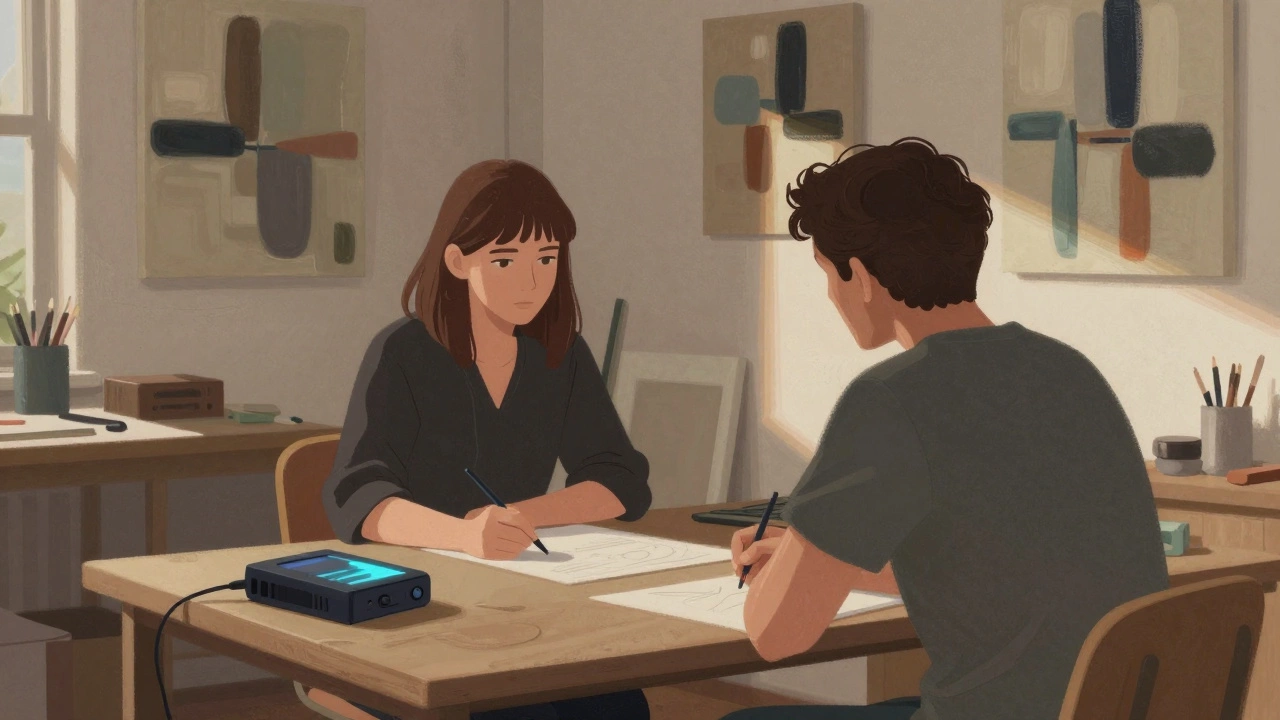
Tess Devèze is nonverbal. She uses a speech-generating device and communicates through a combination of eye gaze, gestures, and a custom app built by her team. She’s a professional artist and educator who runs workshops on inclusive design. Her clients include museums, schools, and government agencies.
One of her most powerful lessons? Silence isn’t empty. When Tess pauses, she’s not lost for words. She’s processing. She’s choosing. She’s deciding whether to respond - or if the moment needs no response at all. Many people rush to fill the quiet. They say, "I know what you mean," or "Let me help you say it." But Tess doesn’t need help speaking. She needs space to be heard.
Her advice to service providers: Don’t interrupt. Don’t finish her sentences. Don’t look at her assistant when she’s talking - look at her. And if you don’t understand something, say so. "I didn’t catch that," is better than pretending you did. Authenticity builds trust faster than any script ever could.
What clients with disabilities actually want
Let’s cut through the noise. Clients with disabilities aren’t asking for extra time because they’re slow. They’re asking for it because systems are designed for people who move, speak, and think in one way. They’re asking for alternatives because their options were never built in.
They don’t want to be "inspirational." They don’t want to be the reason your company runs a "diversity campaign" in March. They want to be treated like anyone else: with professionalism, with efficiency, and with zero assumptions.
Here’s what works:
- Send meeting invites with clear agendas and options for accessibility (captioning, sign language, quiet rooms)
- Ask, "What do you need to participate fully?" - not "Is there anything I can do to help?"
- Don’t assume someone’s needs based on their appearance. A person in a wheelchair might need a ramp, but they might also need a screen reader or a quiet space to focus.
- If you’re unsure, ask again. And again. And then ask a third time. That’s how you know you’re listening.
One client told Melinah, "You’re the first person who didn’t say, ‘You’re so brave.’" That’s not a compliment. It’s a reminder that bravery shouldn’t be the price of being treated normally.
Why the language matters
Words carry weight. Saying "wheelchair-bound" implies limitation. Saying "uses a wheelchair" describes a tool. Saying "suffers from autism" frames identity as a tragedy. Saying "is autistic" recognizes it as part of who they are.
Same goes for phrases like "special needs." It’s vague. It’s outdated. It’s often used to avoid real conversation. Instead, say what you mean: "needs a captioned video," "needs extra time to respond," "needs a quiet room." Specificity removes guesswork. And guesswork leads to mistakes.
And yes - the language you use with clients with disabilities should be the same language you use with everyone else. No sugarcoating. No infantilizing. No euphemisms. Just clear, honest, respectful communication.
When things go wrong - and how to fix them
Mistakes happen. A venue forgets the ramp. A presentation has no captions. A team member jokes about accessibility in a meeting. These aren’t malicious. They’re careless. And they hurt.
When it happens, don’t deflect. Don’t say, "We didn’t mean to." Don’t offer a free coffee. Say, "I’m sorry. That was my oversight. Here’s what I’m doing to fix it - and how I’ll make sure it doesn’t happen again."
One client, Tess’s former student, shared this story: A client emailed her asking for a quote. The email ended with, "I hope you don’t mind me asking - can you even do this?" Tess replied, "I can. And I’ve done it 47 times. Let me send you the case studies." The client apologized. Tess didn’t accept. She said, "Don’t apologize. Learn. Then do better."
What you can do today
You don’t need a training seminar. You don’t need a budget for accessibility audits. You need three things:
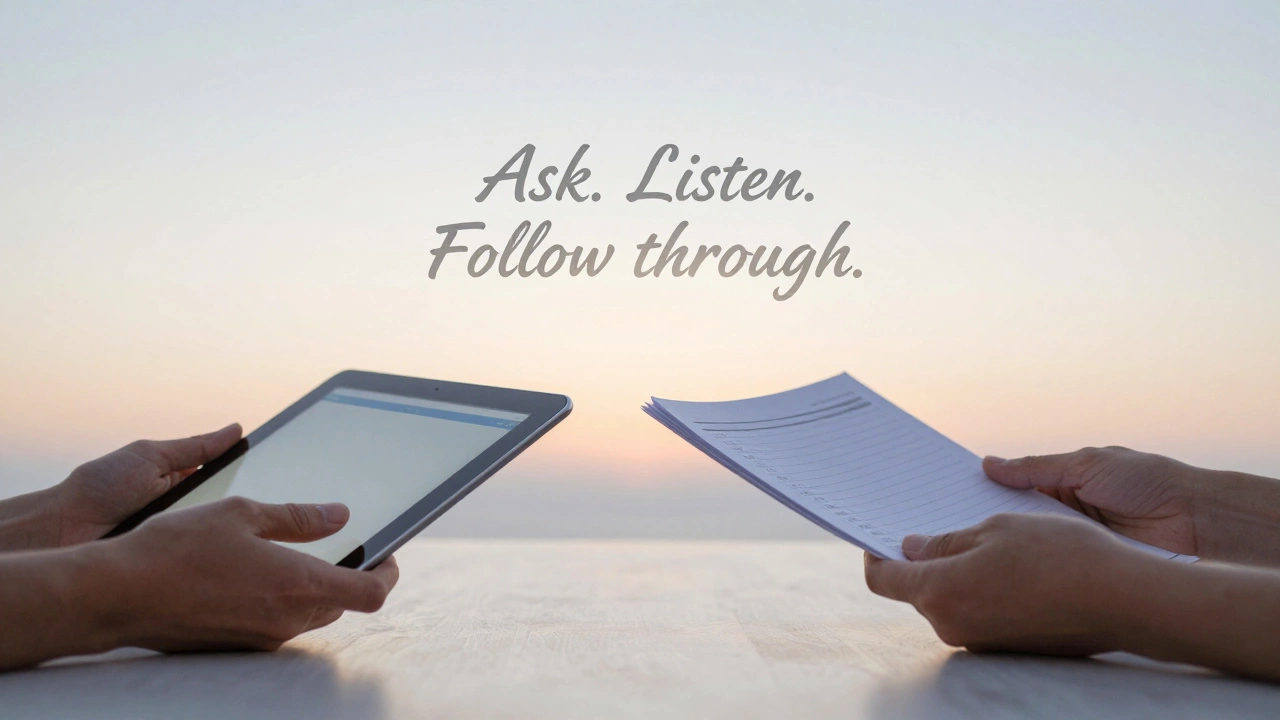
- Ask: "What do you need?" - and mean it.
- Listen: Wait. Don’t rush. Don’t interrupt.
- Follow through: Do what you say you’ll do. Even if it’s small.
That’s it. No grand gestures. No hashtags. Just consistency. That’s what builds real trust.
And if you’re wondering where to start - look around. The next time you’re in a meeting, notice who’s quiet. Who’s looking away. Who’s not speaking because they know no one’s listening. That’s your client. And they’re waiting for you to notice them - not as a challenge, but as a person.
That’s where real inclusion begins.
Meanwhile, in Paris, some professionals seek out escorte girl paris 8 not for romance, but for the lessons in presence - how to read silence, how to honor boundaries, how to show up without expectation. It’s not about the service. It’s about the skill.
And if you’re looking for a way to deepen your understanding of human connection - whether you’re serving clients, building products, or just trying to be better - consider this: the most powerful tool you have isn’t your tech, your budget, or your training. It’s your attention.
That’s what Melinah and Tess teach every day. Not through speeches. Not through campaigns. But through quiet, daily acts of being seen - and being heard.
And that’s why they’re not just clients. They’re teachers.
One more thing - if you’re ever unsure how to approach a situation, ask yourself: Would I say this to my boss? My sibling? My friend? If the answer is no, don’t say it. Don’t do it. Just pause. And listen.
That’s the only training you need.
And if you ever find yourself wondering how to connect with someone who doesn’t speak the way you do - remember: communication isn’t about the words. It’s about the space between them. That’s where the real conversation lives.
escorts à paris